Total Pageviews are you looking

Translate traducir 翻譯 翻訳する แปลง переводить übersetzen traduire

Showing posts with label iphone. Show all posts

Thursday, June 14, 2012

Is Apple fragmenting the iPhone


Is Apple fragmenting the iPhone?

iPhone 4 won't get the new turn-by-turn features in iOS 6, just like it didn't get Siri. But it's still for sale, and so is the iPhone 3GS. Is Apple committing the Android sin of fragmentation, and will users rebel?
iOS 6 image: Well, it will take <i>some</i> iPhones and iPads to entirely new directions.
Well, it will take some iPhones and iPads to entirely new directions.
Way down in the fine print about Apple's upcoming iOS 6, you'll find a little note that says new features like Flyover and turn-by-turn directions are only available on the iPhone 4S, or the iPad2 or higher.
A note immediately below that says Siri is only available on the iPhone 4S or third-generation iPad.
Since the iPhone 3GS, iPhone 4, and iPad 2 are all actively for sale and still being marketed by Apple, I have to wonder: is Apple on the road to fragmenting the iOS experience? Could there come a future when not only do certain Apple apps and services run on some devices and not on others, but when this problem will start to plague third-party developers, as well? And even if app incompatibilities don't result, is Apple risking Android levels of user confusion as it continues to withhold features from its legacy -- but still for sale -- hardware?
This latest slight, keeping turn-by-turn directions off iPhone 4, is especially enraging. It was bad that the iPhone 4 didn't get Siri, much worse that it got no speech to text at all -- not even the little microphone on the keyboard that all Android phones, even the most basic, have. But to withhold turn-by-turn from the iPhone 4 isn't just fragmentation: it's deliberate, aggressive, and abusive forced upgrade behavior.
Sure, the original iPhone 4 is fully two years old -- the 4GB GSM version. You could argue it's just time for folks to upgrade (I'm not a fan of that argument, personally, since it's wasteful if the device works fine, and financially unfeasible for many). But that phone didn't become available on CDMA carriers until February 2011, so some Verizon owners have had it for less than 18 months. The white model didn't come out until April 2011, so fashionistas have had it for barely over a year. And the 8GB model came out in October 2011. That device is less than a year old, and in Apple's OS terms, it's so obsolete it doesn't get speech to text or turn by turn navigation, which have, for the past few years, been the two strongest arguments for getting an Android phone over an iPhone.
Image: Stare lovingly at these helpful directions, iPhone 4 owners. It&#39;s Apple&#39;s way or the lost highway.
Stare lovingly at these helpful directions, iPhone 4 owners. It's Apple's way or the lost highway.
To address, up front, the inevitable argument that the iPhone 4 may not be "capable" of handling turn-by-turn directions (or speech-to-text functionality, for that matter), I will point you not only to any number of midrange Android smart phones (like the same era LG Enlighten) that support both features. I will also point you to any number of iPhone GPS navigation apps that provide turn-by-turn, including the now free MapQuest and the very robust TomTom app, which has been around since the iPhone 3G. And then I will point you to a similar number of voice control apps, like Vlingo. (And in so doing, will solve your problems, too, but that's not the point!)
I'm quite certain the iPhone 4 can handle turn-by-turn and speech functionality. I'm equally certain that Apple kept it out on purpose, and it's not to help out app developers, it's to sell more newer phones, at a clip so fast it makes your head spin. It's a cycle that far outpaces most users' mobile contracts and certainly their wallets. An iPhone is a premium device, and users have a right to expect its features to keep pace with the competition for longer than eight months (in the case of the 8GB iPhone 4).
And Apple now has three versions of the iPhone for sale, each with a different feature set, not to mention three versions of the iPad, each with its own selection of omissions. That's an unusually complicated product scheme for Apple, and customers getting a free 3GS offer or now discounted iPhone 4 are in for a rude surprise when they find that their legacy Apple hardware can't do things that have been baked into every Android phone for years.
Image: Three phones, three different sets of features. How un-Apple of them!
Three phones, three different sets of features. How un-Apple of them!
I've written about Android fragmentation before, and many of you know I consider it the biggest threat to that platform's ongoing success. And Android's OS upgrade issues are probably worse than what Apple is currently doing with iOS 6 -- it's closer to differentiation than fragmentation, at least for the moment. And, as one commenter pointed out in a lengthy Google Plus discussionon the topic, you can upgrade your Apple hardware, but you can't force a carrier or Google to upgrade your version of Android.
But a developer writing for iPhone 4S and its processor capabilities could certainly run into problems with the same app on a legacy 3GS, or integrating with mapping features available only on a 4S. Depending on how many versions of the iPhone Apple keeps around after the next version is launched, you can imagine things starting to get awfully messy.
Even if true fragmentation never occurs, leaving the iPhone 4--a perfectly capable and powerful device--in the dust this soon is both unnecessary and inconsiderate. Apple has always pushed a rapid upgrade agenda, but not while continuing the sell the older versions. It's a bad trend, and could backfire as Android and even Windows 8 competition starts to grow. Simplicity works, Apple. Stick with it.


Thursday, May 17, 2012

only for andriod users screen your phone


Screenshot UX Trial


this great app most have andriod users 

Screenshot UX Trial
after using this app in two days i love it when you have something on your phone you can now share it it takes a pic of your screen you seen so facebook,twitter and so on can now share it this was used on lg optimus by tmobile 

Description

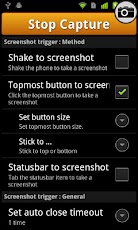
You can take a snapshot for android device.
Screenshot app for Android device(Phone/Tablet).
May require a rooted phone.
Phone list that follows does not require the roots.
- Gallaxy series (S,S2,...)
- HTC phones (Sensation, ...)
- Motorola (Atrix, ...).
- LG Optimus series (G2X, ...)
* Rooting may be needed depending model. Test your phone.

Features:
- Analyzing possible capture method.
- Intuitive Topmost button to screen shot.
- Shake to screen shot.
- Status bar to screen shot.
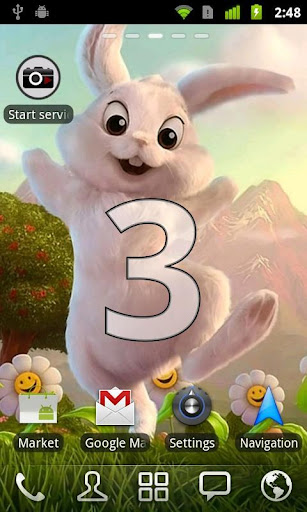
- Intuitive Countdown feedback UI before screenshot.
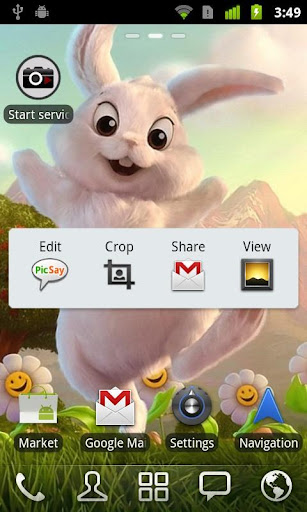
- Edit(Crop, Draw/Undo/Redo, ...).
- Share menu integration for Email, MMS, ...
- Choose custom save folder
- Fast start shortcut (Long tab empty home screen > Shortcuts > Select ScreenshotUX icon).

* IF YOUR DEVICE NEEDS ROOT and NOT ROOTED(and not support preloaded capture method),
You have to initialize screenshot service with your desktop.
(There is no other way due to Android security model).
Simply, Attach your phone to your desktop, and execute desktop app(You can download Liveov website, http://goo.gl/oV7vB).
More detail instruction guide is embedded this app.
* You can take 14 screenshot in trial

Used permissioins:
- INTERNET: for connect to localhost screenshot server for rooted phone.
- SYSTEM_ALERT_WINDOW: for topmost camera button.
- VIBRATE: for vibrate feedback.
- WRITE_EXTERNAL_STORAGE: to save the screenshot.
- GET_TASKS: for detect foreground Develoment setting activity for non rooted&non preloaded capture method.
- RECEIVE_BOOT_COMPLETED: for boot on start option on ICS.
Tags: screenshot screen capture snapshot no root rooting

my phone never been rooting or jaw too
  
(16,074


i give it 4 out of 5 too 


Check out Screenshot UX Trial on Google Play! https://play.google.com/store/apps/details?id=com.liveov.shotuxtrial


Wednesday, May 16, 2012

join foursquare

you don't know what you missing better then yep

&*rm home http://tinyurl.com/6uk75ld & store http://goo.gl/TBmOS

this app gets 4 out of 5 free too


Tuesday, May 15, 2012

A 22-Year-Old Mother Kills Her Infant Son Because He Interrupted Her Farmville Game on Facebook


Alexandra V. Tobias is awaiting trial after pleading guilty to shaking her 3-month-old son to death. Can you believe that the Florida woman committed this senseless act of violence because her infant's cries were distracting her while she was playing Farmville on Facebook? How could this happen?

If there is any justice Alexandra V. Tobiaswill spend the rest of her life behind bars. The 22-year-old Jacksonville, Florida resident recently plead guilty to killing her 3-month-old son over an online game. She admits that Dylan Lee Edmonsonhad been crying for a while as she played the popular Facebook game Farmville.
Alexandra told police that when the infant wouldn't stop crying, last January, she stepped away from the game long enough to shake the boy, smoke a cigarette and then shake the boy again. The unfit mother suggested that little Dylan "may have hit his head during the shaking."
Disgusting. I can't stomach this kind of abuse. Considering that so many of my friends and family are struggling to conceive, it really enrages me that mothers can be so careless with the kids they were blessed to have.
Dylan's death has been classified as second-degree murder, so if convicted, Alexandra faces the possibility of life in prison. The Farmville craze - it has more than 75 million users who earn virtual money by growing and harvesting crops - is becoming a big cause for concern because there are so many reports of players, like Alexandra, have become addicted to the game.
Dr. Phil even featured a Farmville-addicted mother on his talk show in January. Playing Farmville online became an obsession for this woman. She admits to being on the computer playing from the moment she wakes up until late into the night, while her kids were eating microwaveable meals and living in filth.
If you find yourself spending way too much time taking care of your cyber crops, Dr. Phil suggests deleting the game to ensure that it doesn't become a bigger problem.
I'm going to share this story with every single one of my Facebook friends that like to boast about how well their corn crop and avocado harvests are doing. I suggest you do the same thing!

-Amy L. Harper


Thursday, May 10, 2012

T-Mobile adds 187,000 subscribers in Q1

T-Mobile

T-Mobile today announced its first-quarter 2012 earnings, adding 187,000 net subscribers in the first three months of the year, compared to a loss of 99,000 a year ago. Money-wise, TMoUS saw operating income rise $7.2 percent to $1.27 billion, and average revenue per user jump a couple bucks to $58. The big talk from T-Mobile this week at CTIA, however, is life after the failed AT&T acquisition. And to that end, it's continuing to upgrade its network with an announced $4 billion modernization plan that will pave the way for LTE service in 2013.
Total customers now stand at 33.4 million -- up a couple hundred thousand from the end of 2011, but still 200,000 below Q1 2011.
More: T-Mobile

Wednesday, May 9, 2012

AT&T Mobility CEO: Family data plan coming soon (scoop)

Ralph de la Vega


The head of AT&T's mobility, Ralph de la Vega, at the CTIA conference two years ago.
(Credit: Marguerite Reardon/CNET)
NEW ORLEANS--AT&T's version of the family data plan may be coming sooner than you think.
The company has a firm hold on what type of plan it will offer and intends to offer one soon, said Ralph de la Vega, CEO of AT&T's mobile business, in an interview with CNET here yesterday. A family data plan would allow consumers to buy one bucket of data, which can be used by multiple devices, a move industry observers believe could spur the sale of non-traditional cellular devices like connected tablets.
"I'm very comfortable with the plan that will be offered to our customers," de la Vega said on the sidelines of his company's home security and automation event at the CTIA Wireless trade show.
The comments mark a reversal of de la Vega's uncertainty over the implementation of family data plans just a few months ago. At the time, he told CNET that the company had run into complications over IT and billing issues. Other complications include how the carrier would subsidize devices and get a decent return despite the shared data bucket.
"We want to make sure we get it right," he said in January.
But de la Vega was far more confident yesterday. He said the company knows how the plan would be structured. He, however, declined to provide any specific details on timing, and wouldn't comment on whether it would be out in the next few months or if AT&T would beat Verizon Wireless to the punch.


Monday, April 30, 2012

iPhone 5 Release Date Scheduled for June?


The iPhone 5 could be launching at this year's WorldWide Developers Conference, set to take place in June, according to a report received by tech blog YouMobile yesterday.

The report also revealed that the handset will be 20 percent thinner than the current iPhone and will feature a 4-inch display with a higher DPI resolution.
WWDC takes place from June 11-15 in San Francisco, California.
In 2010, Apple launched the iPhone 4 during the event and the device went on to become one of the most popular Apple handsets to date.
The iPhone 5's unveiling taking place at WWDC 2012 is still just a rumor since Apple has not confirmed any news regarding the device.
Other rumors that have surfaced about its release date have said that is could launch much later in the year. The iPhone 4S came out during an event hosted by Apple in October named "Let's Talk About iPhone."Some insiders are reporting that Apple will launch the next generation iPhone in the fall of 2012.
The October release was backed by Qualcomm, a company that manufactures parts for the iPhone who issued a report stating that there were issues with producing chips that would be needed to power the next-generation of LTE devices.
The iPhone 5 will most likely be an LTE device since the new iPad launched back in March and is compatible with the network.
Piper Jaffray's Gene Munster commented on the issue at Qualcomm stating that it points to the iPhone's launch getting pushed back until October.
"QCOM will likely support an Apple iPhone launch in October. Based on our checks, we believe the design win momentum of QCOM's 28nm products has been exceptionally strong and a 28nm LTE baseband is likely designed to the next iPhone," said Munster.

The Times takes on Apple again, with report on taxes


Following the year's earlier reports on Foxconn and on Apple's practice of sending manufacturing overseas, The New York Times publishes a piece that claims Apple has been a pioneer in developing ways to sidestep taxes.
by  
The New York Times is once again putting Apple under the microscope, with a new, in-depth report about the tactics the company uses to cut its global tax bill by billions of dollars every year.
"Almost every major corporation tries to minimize its taxes, of course," the report says. Nevertheless, "Apple serves as a window on how technology giants have taken advantage of tax codes written for an industrial age and ill-suited to today's digital economy."
The report claims Apple has been a pioneer in developing ways to sidestep taxes and that companies seeking to do the same have used its methods as templates.
The article comes as Apple -- which, with products like the Mac, the iPhone, and the iPad, has inspired devotion from numerous consumers worldwide -- is perhaps still trying to move beyond past negative reports regarding the practices of manufacturing partner Foxconn. It's also been criticized by some in regard to domestic job creation and the hugely profitable company's lack of factories in the U.S. The Times published articles about those topics in January, setting off a wave of discussion.
This time around, the Times reports that Apple essentially sets up its business to take advantage of parts of the U.S. and the world that have lower tax rates for corporations. For instance, though its headquarters are located in California, and it has no manufacturing or customer-care operations in Nevada, Apple set up a small office in Reno -- a mere 200 miles from its Cupertino HQ -- to collect and invest its profits. California's corporate tax rate is 8.84 percent. Nevada's is zero.
That's just one example. Citing unnamed former executives at the company, the Times reports that Apple's innovation does not lie solely with product development. The company has also led the way with tax-dodging strategies such as the "Double Irish With a Dutch Sandwich":
 Apple, for instance, was among the first tech companies to designate overseas salespeople in high-tax countries in a manner that allowed them to sell on behalf of low-tax subsidiaries on other continents, sidestepping income taxes, according to former executives. Apple was a pioneer of an accounting technique known as the "Double Irish With a Dutch Sandwich," which reduces taxes by routing profits through Irish subsidiaries and the Netherlands and then to the Caribbean. Today, that tactic is used by hundreds of other corporations -- some of which directly imitated Apple's methods, say accountants at those companies.
With practices like this, the report claims, Apple has been able to "allocate about 70 percent of its profits overseas," though "the majority of Apple's executives, product designers, marketers, employees, research and development, and retail stores are in the U.S."
The Times also says the advent of digital goods has changed the game for companies. The report gives details of an Apple subsidiary in Luxembourg: "The only indication of the subsidiary's presence outside is a letterbox with a lopsided slip of paper reading "ITUNES SARL." But because of that presence, the Times says, songs, TV shows, and apps downloaded via iTunes by people across Africa, Europe, and the Middle East are recorded as having been sold in Luxembourg.
 The advantages of Luxembourg are simple, say Apple executives. The country has promised to tax the payments collected by Apple and numerous other tech corporations at low rates if they route transactions through Luxembourg. Taxes that would have otherwise gone to the governments of Britain, France, the United States and dozens of other nations go to Luxembourg instead, at discounted rates.

"We set up in Luxembourg because of the favorable taxes," said Robert Hatta, who helped oversee Apple's iTunes retail marketing and sales for European markets until 2007. "Downloads are different from tractors or steel because there's nothing you can touch, so it doesn't matter if your computer is in France or England. If you're buying from Luxembourg, it's a relationship with Luxembourg."
The result, the Times says, citing government and corporate data, is that tech companies -- including Apple, Google, Yahoo, and Dell -- are among the least taxed, paying worldwide cash taxes in the last two years that were a third less than those paid by other companies in the Standard & Poor's 500-stock index.
The paper claims that without the tax strategies it uses, Apple would have paid $2.4 billion more in federal taxes in the U.S. last year. As it stands, though, the company paid at a rate of 9.8 percent, versus nontech representative Wal-Mart's 24 percent.
The article goes on to discuss the budget crunch that's hit many, if not most, states in the U.S., and it points out that the issue is complex: Apple and other tech companies do create jobs and wealth that remain in the U.S., and they also engage in significant charitable activities. But, the Times says, some feel that those things don't make up the loss of tax revenue. The article quotes Brian Murphy, president of De Anza College, a community college near Apple HQ, where Apple co-founder Steve Wozniak went to school from 1969 to 1974. The school is severely threatened by the current budget crunch.
"I just don't understand it," Murphy told the Times. "I'll bet every person at Apple has a connection to De Anza. Their kids swim in our pool. Their cousins take classes here. They drive past it every day, for Pete's sake. But then they do everything they can to pay as few taxes as possible."
And the Times relates an episode involving late co-founder Steve Jobs and the Cupertino City Council. During the approval process for Apple's new campus, then-Councilwoman Kris Wang asked how residents might benefit and suggested that Apple might provide free Wi-Fi to the city, as Google had in neighboring Mountain View.
"See, I'm a simpleton;" Jobs replied. "I've always had this view that we pay taxes, and the city should do those things. That's why we pay taxes. Now, if we can get out of paying taxes, I'll be glad to put up Wi-Fi." He then suggested that if the council was unhappy, Apple could move -- and take with it the many millions of dollars it pays in property taxes annually. Wang dropped the Wi-Fi idea.
"We're proud to have Apple here," she told the Times for the article. "But how do you get them to feel more connected?"
For its part, Apple provided the Times with a statement that says, among other things, that the company "has conducted all of its business with the highest of ethical standards, complying with applicable laws and accounting rules," that the company is "incredibly proud of all of Apple's contributions," and that Apple "pays an enormous amount of taxes, which help our local, state and federal governments."
CNET contacted Apple for comment. We'll update the story when we get more information.
You can read the Times report in its entirety here.